
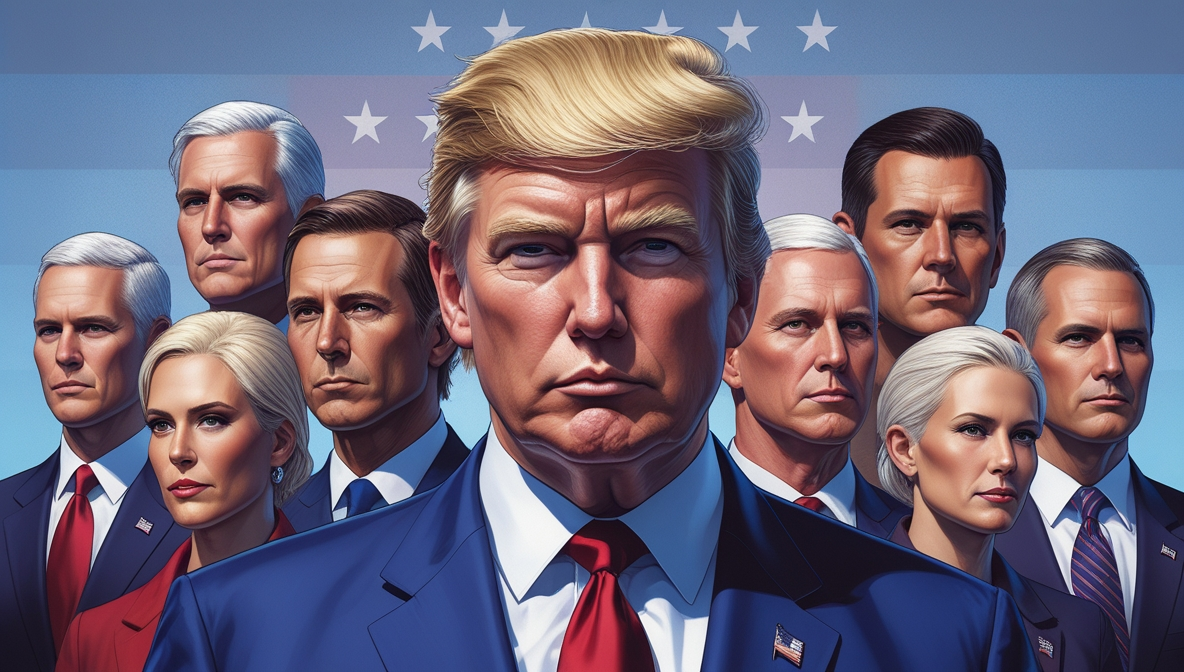
On Friday, President Donald Trump's administration proposed a $163 billion cut to the federal budget, aiming to significantly reduce spending on education, housing, and medical research starting next year, while simultaneously increasing funding for defense and border security.
The administration's statement indicated that national security expenditures would rise by nearly 65% compared to 2025 levels, reflecting Trump's commitment to intensify the fight against illegal immigration.
Conversely, non-defense discretionary spending (excluding social security, Medicare, and debt servicing) would decrease by 23%—reaching its lowest point since 2017, according to the White House Office of Management and Budget (OMB).
Notably, the proposal includes over $2 billion in cuts to the Internal Revenue Service (IRS) and more than a 40% reduction in budgets for the National Institutes of Health (NIH) and the Centers for Disease Control and Prevention (CDC).
This marks Trump's first budget since returning to office and underscores his pledge to reduce federal bureaucracy while enhancing security expenditures. However, Democrats have criticized these cuts as excessive, and some Republicans have expressed concerns over defense funding levels.reuters.com
"At this critical juncture, we need a historic budget—one that ends the funding of decline, puts Americans first, and provides unprecedented support to our military and national security," stated OMB Director Russ Vought.
Vought, formerly with the Heritage Foundation, was the architect of "Project 2025," a plan to diminish the federal government's role. After his election, Trump appointed him as the chief budget officer.The Guardian+5NBC Chicago+5NBC New York+5
Fiscal experts caution that extending Trump's 2017 tax cuts could further exacerbate the already substantial national debt, which has reached $36 trillion.
The proposed "slimmed-down" budget primarily serves as a political document outlining the administration's priorities. It is intended to guide Republicans in Congress during the formulation of spending legislation.
Republican Senator Susan Collins of Maine, a key figure in the budget process, responded skeptically to the proposal:
"This request arrived late, and many details remain unclear. However, I already have serious reservations," she noted, also expressing concern over insufficient defense funding and cuts to aid for the underprivileged.
Cuts to Government Agencies and Social Programs
The budget proposes a $50 billion reduction in State Department expenditures, partly due to a merger with the U.S. Agency for International Development (USAID).
The $2.49 billion cut to the IRS is intended to halt the agency's "weaponization" during Joe Biden's previous administration, according to officials. However, independent experts warn that this could negatively impact tax collection efficiency and increase the budget deficit.
The proposal also anticipates reductions in programs for NASA, the FBI, and the Bureau of Alcohol, Tobacco, Firearms, and Explosives.
The Department of Education is expected to see a budget decrease of approximately 15%, reflecting Trump's desire for significant reorganization or even elimination of the department. The Department of Housing and Urban Development's budget is planned to be nearly halved.
"The days of Donald Trump pretending to be a populist are over," stated Senate Democratic Majority Leader Chuck Schumer. "This budget is a direct attack on hardworking Americans."
Defense, Immigration, and Congressional Impact
The administration claims that the defense budget will increase by 13%, but Senator Roger Wicker of Mississippi believes this doesn't account for inflation and effectively results in a decrease.
Republicans in Congress are expected to propose amendments to increase these expenditures in the final legislation.
The budget also includes:
- $500 million to enhance border security and support mass deportations
- $766 million for new security technologies, support for 22,000 Border Patrol agents, and the hiring of additional customs officers.
According to officials, the White House is still working on an additional package of legislative initiatives to formalize the already-implemented cuts.