
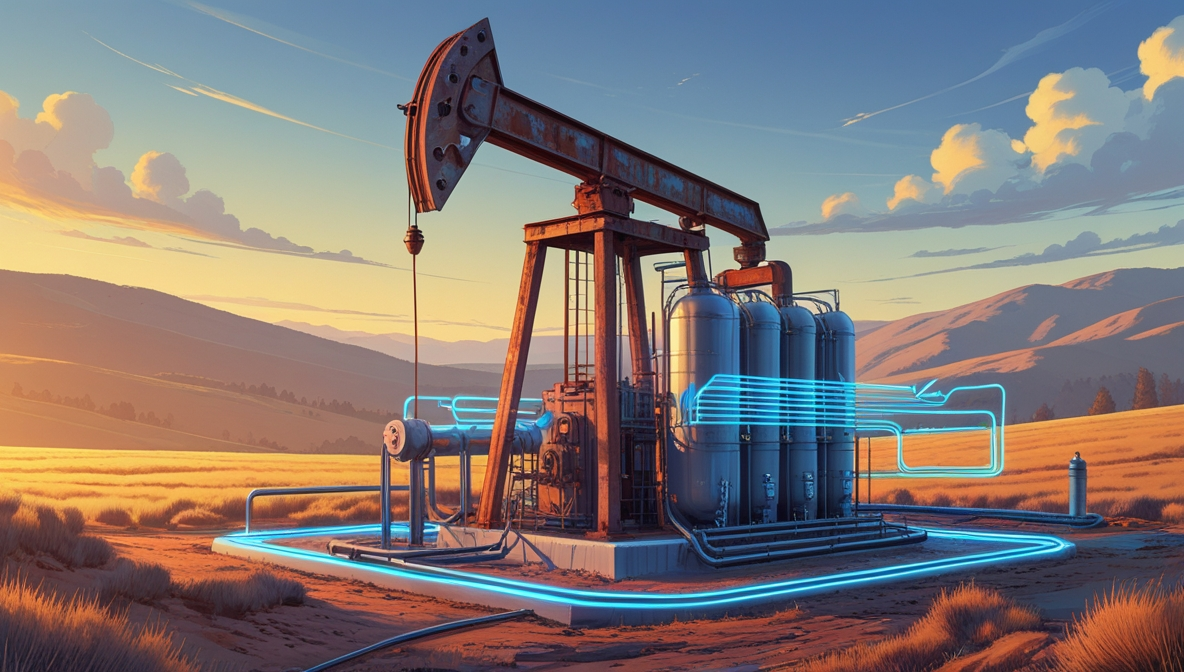
The transition from fossil fuels to renewable energy sources like wind and solar requires better ways to store energy for use when the sun isn't shining or the wind isn't blowing. New research by researchers from the University of Pennsylvania has revealed that using natural geothermal heat in depleted oil and gas wells can improve the efficiency of one proposed energy storage solution: compressed air energy storage (CAES).
The researchers proposed a new geothermal compressed air energy storage system that utilizes depleted oil and gas wells (estimated to be around 3.9 million in the U.S. according to the Environmental Protection Agency) and found that it could increase efficiency by 9.5% compared to existing technologies. This means that a larger percentage of the energy stored in the system could be recovered and converted into electricity, potentially increasing profits for operators.
“This efficiency gain could dramatically change the situation and make compressed air energy storage projects economically viable,” said Arash Dahi Taleghani, professor of petroleum and natural gas engineering at the University of Pennsylvania and the corresponding author of the study. “Additionally, we could significantly reduce upfront costs by using existing oil and gas wells that are no longer in operation. This could be a profitable solution for the industry.”
According to the researchers, repurposing depleted oil and gas wells will allow operators to access geothermal heat from hot rock formations underground. This eliminates the need for drilling new wells and potentially makes the technology more attractive to the industry.
Gases like compressed air increase pressure with rising temperatures, which means heated wells could potentially store more energy, Taleghani says. When electricity is needed, the heated compressed air is released, driving a turbine to generate power.
“Without taking advantage of geothermal heat, you wouldn’t get a significant increase in efficiency,” Taleghani explained, noting that the team used numerical modeling to determine that placing CAES systems in abandoned oil and gas wells significantly raised the air temperature in the systems. “And also, drilling new wells may not be economically viable for this type of storage. But by combining these two factors and using modeling, we found that this could be a very good solution.”
Energy storage options like CAES are particularly important for the transition to clean energy because they address the intermittency issue of renewable sources. By storing excess renewable energy and releasing it as needed, energy storage helps maintain the stability and reliability of the power grid.
“The problem is that sometimes when we need energy, there’s no sunlight or wind,” Taleghani said. “This is a huge barrier to the further expansion of renewable energy. That’s why it’s really important to have some kind of energy storage capacity to support the grid.”
In Pennsylvania alone, regulators estimate there are hundreds of thousands of abandoned wells. If these wells are improperly sealed or damaged, methane could leak into the atmosphere and groundwater.
“If we use existing wells, we’re actually solving two problems at once,” Taleghani said. “First, we’re sealing up these wells to stop any leaks. And then, by repurposing these wells for energy storage, we’re using already existing infrastructure, which helps preserve jobs in these regions and gives communities a chance to be part of the energy future.”